Savoury baking

Most muffin recipes are for sweet muffins, but you can of course make savoury muffins. I am going for a walk tomorrow to Barrenjoey Head and wanted to bake something to take to snack on. If you are a bit scared of baking, muffins are a great way to build your confidence. With muffins, the less mixing and work you do the better and it is simply a matter of measuring and mixing then baking.

Akudjura ground bush tomato

Continuing with my Australian native spices experimentation, I used Ajydhyra or Bush Tomato in this recipe, which I tracked down at Herbie’s Spices. The akudjura gives the muffins a lovely roast tomato flavour. You can order Herbie’s Spices online, or they are stocked in many delis and gourmet food stores. I also used dried greek oregano, which is normally sold with the stems still intact – to separate the dried oregano leaves, you give the bunch a bit of a shake or a rub to separate the dried leaves.

What I was cooking this time last year: Watercress and Pomegranate Tabouli

Tomato and Cheese Muffins

* This recipe’s base ingredients were inspired by a Pear and Ginger Muffins recipe that appears in Nigella Lawson’s cookbook, Nigella Express. I have modified and adapted Nigella’s recipe to come up with the below reincarnation.

Ingredients:

Makes 12 muffins.

Dry Ingredients:

  • 300g self-raising flour
  • A generous pinch of salt
  • 80g pine nuts
  • 1/2 tablespoon ground akudjura or bush tomato
  • 1/2 tablespoon dried greek oregano
  • 200g feta cheese
  • 100g grated parmesan cheese
  • 1 punnet cherry tomatoes

Wet Ingredients

  • 125mls natural low-fat natural yoghurt
  • 125mls vegetable oil [I used rice bran oil but any neutral tasting oil is fine]
  • 2 large eggs

Other

  • 1 small red onion
  • 2 cloves garlic
  • 1 teaspoon oil
  • Cooking oil spray

Method:

  • Peel, quarter and finely slice the onion.
  • Crush the garlic cloves.

Onion and garlic

  • Heat the teaspoon of oil in a small saucepan. Add the onion and garlic and cook until the onions are soft and just starting to brown, stirring occasionally.
  • Set the onions and garlic aside to cool.
  • Heat oven to 200°C.
  • Line a cupcake / muffin pan with muffin cases. Spray the cases lightly with cooking oil spray.
  • Measure the flour, salt, akudjura, dried oregano, pine nuts and grated parmesan into a bowl.
  • Cut the cherry tomatoes in half and add to the bowl.

Tomato muffin ingredients

  • Crumble the feta and add to the bowl.
  • Add the cooled onion mixture to the bowl.
  • Stir the ingredients in the bowl until everything is well combined and coated in flour.
  • Measure the oil and yoghurt  into a jug.
  • Add the eggs to the oil and yoghurt and stir to combine.

Muffin wet and dry ingredients

  • Add the wet ingredients to the dry ingredients and stir until just combined – the less mixing you do the better.
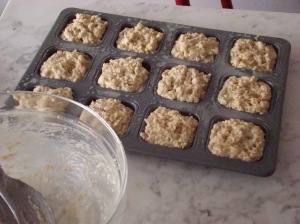
  • Add spoonfuls of the mixture to the muffin cases.

Tomato and cheese muffin mixture

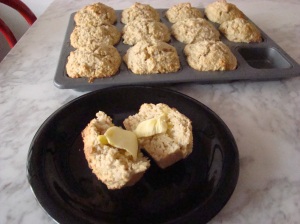
  • Place muffins in the oven and bake for 20 minutes, or until the muffins spring back when touched in the middle.
  • Remove muffins from the oven and either eat warm or when they have cooled. Enjoy.

What is your favourite baking recipe? Has this post inspired any new ideas?

Leave a Comment

Filed under Baking, Breakfast, Cheese, Herbs, Recipes, Savoury, Spices, Vegetarian

Chowder

A friend is currently in the US and has raved about the New England Clam Chowder he discovered in Boston. This got me thinking about the Seafood Chowder I tried and loved when I was in San Francisco a few years ago. There are many variations on the chowder recipe, normally inspired by fresh produce available in different regions in the US, and further back in history, several parts of Europe. I decided to try to make my version of chowder now that the weather has got cooler here in Sydney.

You could use any type of seafood that inspires you and is fresh; prawns, fish, shellfish etc. I used clams, as my fish monger had fresh ones available vacuum packed in their own juice and ready to go. I left the clams in their shell, purely for aesthetic purposes. A lot of recipes use bacon, but as a pescitarian, I substituted smoked salmon to give a smokey depth of flavour. I love things spicy so I added cayenne pepper for heat and smoked paprika to pimp up the smokey stakes. If you don’t like things quite so hot, skip the cayenne and just use the smoked paprika. Some recipes use a roux (a mixture of flour and fat) to thicken the soup and leave the potatoes chunky, I skipped the flour and blended the potatoes to thicken my soup.

You can serve your chowder with water cracker biscuits (which I think are similar to the American style oyster crackers), crusty bread, croutons, or as it was done in San Francisco, in hollowed out sour-dough bread.

What I was cooking this time last year: Pasta Pronto

Clam Chowder

Serves 4

Ingredients:

  • 2 tablespoons oil
  • 1 onion
  • 2 sticks of celery
  • 1 carrot
  • 1 teaspoon thyme leaves
  • 3 garlic cloves
  • 2 fresh bay leaves or 1 dried
  • 100g smoked salmon
  • 1/2 teaspoon cayenne pepper
  • 1 teaspoon smoked paprika
  • 1kg potatoes
  • 1kg vacuum pack fresh clams
  • 2 cups milk
  • 1 cup water
  • 1/2 bunch parsley
  • cream (optional, for serving)
  • Bread or crackers, to serve

Method

  • Finely chop the onion, carrot and celery.
  • Pick the thyme leaves off their stalks, and the parsley leaves off their stalks.
  • Finely chop the parsley leaves and set aside.
  • Finely chop the tender parsley stalks (discard any that are too thick).

Chowder ingredients

  • Heat the oil in a large pan.
  • Add the chopped onion, carrot, celery, parsley stalks, thyme leaves, garlic cloves, bay leaves, cayenne pepper and smoked paprika.

Soup stock base

  • Cook, stirring occasionally while you roughly chop the smoked salmon.
  • Add the smoked salmon to the pot and continue to cook and stir while you peel and chop the potatoes into 1cm dice.

Potato soup base

  • Strain the clam juice from the vacuum pack (you should end up with about 1 cup) and add to the pot.

Clam juice clam shell

  • Add 2 cups of milk and 1 cup of water to the pan and cover with a lid.

Soup cooking

  • Cook until the potato is soft, stirring occasionally.
  • Remove the bay leaves.
  • Blend the soup until smooth.

Soup blending

  • Add the clams to the soup pot and cook for another 5 – 10 minutes until the clams are hot.

Clam chowder cooking

  • Your soup is ready to serve. Dish into bowls, drizzle with cream and garnish with chopped parsley. Enjoy.

Clam Chowder

What is your favourite soup? Has this post inspired any new ideas?
Leave a Comment

Filed under Recipes, Salmon, Savoury, Seafood, Soup

Breakfast in bed

Next Sunday (the 2nd Sunday in May) is Mother’s Day in Australia, and lots of kitchens will be preparing breakfast in bed as a special treat for mum.

I first got the idea of using cottage cheese in pancakes from a Cheesecakelets recipe by Nigella Lawson, in her book Feast. Nigella’s recipe calls for separating the eggs and whisking the whites. This does produce lovely light pancakes but I think facing a whisk first thing in the morning is a bit much, especially if you have little helpers assisting with the cooking.

Cottage cheese is an under-utilised ingredient, it is a great alternative to ricotta cheese in cooking if you are trying to watch your fat intake. I am not using cottage cheese in this recipe because of it’s low(er) fat properties, but because the cottage cheese retains its curds, and once cooked, they melt and give a delicious oozy texture to the pancakes.

If you haven’t tried strawberries marinated in balsamic vinegar you may be skeptical, but the acid from the vinegar draws out the strawberry juice and you end up with a sweet sauce. You could add a little sugar to the vinegar and strawberries if the strawberries are especially tart, but I don’t find it is required. My only tip is to not leave the strawberries marinating too long (I wouldn’t leave them overnight) or they will continue to break down. Preparing the strawberries just before you start making the pancakes is sufficient time to allow the flavours to develop. Strawberries are expensive in Sydney at the moment, so if you wanted to skip them you could serve your pancakes with maple syrup, lemon and sugar or other fresh or defrosted berries.

What I was cooking this time last year: Bircher Muesli

Pancakes with Marinated Strawberries

Serves 2 – 3

Ingredients

Pancakes

  • 1 cup self-raising flour
  • 2 tablespoons sugar
  • 1 egg
  • 250g cottage cheese
  • Zest and juice of 1 lemon
  • 100mls milk
  • 20g butter (plus extra for frying if you don’t have a non-stick frying pan)

Marinated Strawberries

  • 1 punnet of strawberries
  • 1 tablespoon of balsamic vinegar

Method

  • Wash then hull your strawberries and roughly chop. Add your chopped strawberries to a bowl and add the balsamic vinegar and stir to combine. Set aside to marinate.

Strawberries

  • Measure out the  flour, sugar and cottage cheese  into a bowl.
  • Add the egg to the bowl with the flour.
  • Zest the lemon peel into the bowl.

Pancake ingredients

  • Juice the lemon and add to the bowl.
  • Add the milk and stir everything to combine.
  • Melt the butter in a frying pan over low heat. Add the melted butter to the pancake batter and stir to combine.

Pancake batter

  • Heat your frying pan over a medium heat and add spoonfuls of the pancake batter to the pan.

Pancakes cooking

  • Cook on one side, your pancakes are ready to turn when bubbles start to appear on the top of the pancakes.
  • Flip your pancakes and cook on the other side until golden brown.
  • Dish up straight from the pan or place in a low oven to keep warm until all of the pancakes are cooked.

Pancakes with strawberries

  • Top the pancakes with marinated strawberries. Enjoy.

What is your favourite breakfast in bed? Has this post inspired any new ideas?
1 Comment

Filed under Berries, Breakfast, Cheese, Lemon, Recipes, Sweet, Vegetarian

Twist on a classic

This is a pescetarian twist on the comforting classic carbonara classic recipe. The traditional carbonara generally consists of eggs, cheese, bacon (or similar) and black pepper. I’m not sure what it is about the creamy richness of the sauce, smokiness from the fish combined with the zesty tang from the lemon, but this is my ultimate (savoury) comfort food.

When adding the lemon juice to your cream and egg mixture, add a little juice at a time and stir as you go to combine and prevent curdling (and don’t try and add cream to lemon juice or you really will end up with a mess).

I used hot smoked trout which has a texture similar to cooked fish, but with the delicious smokey flavour.  You could also use regular smoked trout or smoked salmon to similar effect. This is to substitute for the bacon flavour in the original carbonara recipe.

Regarding your herbs, feel free to experiment. I used lemon thyme and tarragon because that is what I happened to have growing and both go well with seafood. I added the spinach in a feeble attempt to inject some healthiness into the recipe.

I love the slurpiness of spaghetti, but feel free to use your favourite pasta.

What I was cooking this time last year: Thai Curried Pumpkin Soup

Creamy trout pasta

* This recipe was adapted from a Lemon Linguine recipe in “How to Eat” by Nigella Lawson. I have modified and adapted it over the years to come up with the below reincarnation.

Serves 2

Ingredients:

  • 2 egg yolks
  • 150mls cream
  • zest and juice of 1 lemon
  • 2 tablespoons of chopped herbs (I used lemon thyme and tarragon)
  • 1 clove garlic
  • 1 tablespoon olive oil
  • 2 spring onions
  • 100g hot smoked trout
  • 2 large handfuls of baby spinach
  • salt and plenty of black pepper
  • Pasta for 2
  • parmesan cheese, to serve

Method

  • Put a large saucepan of salted water on to boil to cook your pasta.
  • Finely chop the spring onions and crush the garlic.
  • Heat the olive oil in another saucepan over a low heat and add the garlic and chopped spring onions.

Garlic and spring onions

  • In a measuring jug add the cream and egg yolks. Add salt and pepper to taste and stir to combine.

Cream pepper herbs

  • Zest the lemon and add to the cream mixture.
  • Juice the lemon and add a little juice at a time, stirring to combine.
  • Add the cream mixture and herbs to the garlic and onions and stir to combine.
  • Put your pasta on to cook in the boiling salted water.
  • Flake the trout and add to the cream sauce, stir to combine.

Trout cream sauce

  • Add the baby spinach and stir to combine and wilt the spinach.

Baby spinach

  • Once the pasta is cooked, drain and add to the cream sauce.
  • Stir to combine.
  • Serve, garnished with parmesan cheese. Enjoy.

Creamy trout pasta

What is your favourite pasta dish? Has this post inspired any new ideas?
Leave a Comment

Filed under Cheese, Lemon, Pasta, Recipes, Savoury, Seafood

Pomegranates

We may think of pomegranates as being exotic and a little intimidating, but they have been part of the Australian psyche for a long time. Notably, in the form of grenadine syrup, the sticky red cordial that is used in pubs to make pink lemonade & other mixed drinks [I’ve even seen grenadine used in a schooner of Guinness for the ladies, but haven’t tried this so can’t comment if it is a good idea or not].

Pomegranates are becoming more common and affordable in our fruit and vegetable shops, so today’s post is dedicated to ideas on how to use them.

De-seeding a pomegranate: The parts you use are the pretty jewel-like seeds inside the pomegranate and the juice. To get the seeds out of a pomegranate there are lots of tips and techniques – some say cut in half and whack with a wooden spoon to dislodge the seeds. I cut the pomegranate in half, and squeeze each half over a bowl – lots of juice and seeds will come out. I then proceed to rip the half apart, popping out the seeds as I go. Remove any pithy bits that make their way into the bowl. Pomegranate can stain so you may want to use plastic gloves and be careful not to get splatters on your clothes.

A tip I learnt from one of Nigella’s recipe books, is that pomegranate seeds freeze really well. Remove the seeds as described above, then transfer to a zip-lock plastic bag or a container and freeze until needed. You might want to freeze just the seeds [not the juice], otherwise you will end up with an ice-block and you will need to defrost the whole thing to use – if you have frozen just the seeds they will be on standby to sprinkle a handful over a bowl of Hummus or Tzatziki for decoration or to add to salads, fruit salad and other dishes.

Burghul comes in fine or coarse varieties, I use coarse for the texture. Burghul is also spelt bulgur, burghul or bulgar. If you want a gluten-free alternative to burghul, you could substitute quinoa.

Wishing a Happy Mothers Day to all mums, including my mum for tomorrow.

Watercress and Pomegranate Tabouli

* This recipe was inspired by one that appeared in the November 2003 edition of Australian Gourmet Traveller. I have modified and adapted it over the years to come up with the below reincarnation.

Ingredients:

  • 1 cup burghul
  • 2 lemons finely zested & juiced [if this is too lemony for you, use just the juice]
  • 2 pomegranates – seeds & juice removed
  • 1 bunch watercress, sprigs picked
  • 1 large Spanish or red onion, finely chopped
  • 1 bunch mint, leaves removed & finely chopped
  • 1 bunch flat leaf or Italian parsley, leaves removed & finely chopped
  • 2 tomatoes, finely diced
  • ¼ cup olive oil [extra virgin preferred]
  • Salt & pepper

Method

  1. Add lemon zest [if using], salt and pepper to the burghul.
  2. Add lemon juice, pomegranate juice to a measuring jug, fill up with water to equal 1 ¼ cups of liquid and add to the burghul mix.
  3. Allow to burghul time to stand and absorb the liquid – you can test when it is ready by tasting to make sure the grains are tender [you should end up with a sloppy mix when this is finished, the extra liquid will coat the greens later].
  4. If you are substituting quinoa, cook according to instructions on the pack but using the lemon juice & pomegranate juice.
  5. Prepare the watercress, mint, parsley, onion, tomatoes and pomegranate seeds, combine in a bowl.
  6. Add the soaked burghul and olive oil. Toss to combine.
  7. Can be eaten straight away or keeps for up to a day or two in the fridge. Enjoy.

How do you use pomegranates? Has this post inspired any new ideas?
5 Comments

Filed under Lemon, Pomegranate, Recipes, Salad, Savoury, Vegetarian

Anzac inspiration

Anzac day is recognised on the 25th of April in Australia and New Zealand. Anzac stands for Australian and New Zealand Army Corps, and marks one of the defining moments in the forming of Australia’s national identity. A recipe that is associated with this day of remembrance is the Anzac biscuit. Anzac biscuits are traditionally made from rolled oats, flour, desiccated coconut, sugar, butter, golden syrup and baking soda. It is claimed they gained popularity because the biscuits would last the time and distance it took for them to travel from kitchens in Australia and New Zealand to loved ones dispatched far from home.

I played with the traditional recipe and used condensed milk instead of sugar and golden syrup. If you want to stick to the traditional recipe, follow the details below but leave out the chocolate chips, and replace the condensed milk with 1 cup of sugar and 1 dessert spoon of golden syrup. Even though my recipe uses condensed milk the end result was not an overly sweet biscuit, the condensed milk having less sugar than the sugar and golden syrup that would have normally been used. I added chocolate chips, purely because I love chocolate chip biscuits. If you want chewy biscuits, leave the mixture in heaped spoonfuls on your baking tray. If you prefer a crispy biscuit, flatten out your spoonfuls of biscuit mixture.

Chocolate chip oat biscuits

Ingredients

  • 1 1/2 cups rolled oats
  • 1 cup plain flour
  • 1 cup desiccated coconut
  • 1 teaspoon baking soda
  • 1 egg
  • 100g butter
  • 1 x 395g tin condensed milk
  • 200g dark chocolate

Method

  • Preheat the oven to 180°C, grease 4 baking trays with a generous coating of butter or oil (or use non-stick baking trays).
  • Measure out the oats, flour, coconut and baking soda into a bowl.

Oats flour

  • Chop the dark chocolate into the size you would like your chocolate chips to be (chunky or finely chopped – it’s up to you) and add to the bowl.

Chopped chocolate

  • Add the butter to a saucepan and gently heat until just melted.
  • Add the melted butter, egg and condensed milk to the dry ingredients in the bowl.

Biscuit mixture

  • Stir to combine.
  • Place tablespoonfuls of your biscuit mixture onto your baking trays (I spaced 6 biscuits per tray).

Biscuit mixture on trays

  • Bake your biscuits in the oven for approximately 20 minutes, or until golden brown (you may need to do this in batches depending on how much room there is in your oven).
  • Remove cooked biscuits from the oven and allow to cool for 5 to 10 minutes on the baking trays. You can sample one or two biscuits now for quality control purposes.

Chocolate Chip Oat Biscuits

  • Transfer the biscuits to a wire rack and allow to totally cool. Your biscuits are ready to serve or store in an air-tight container. Enjoy.

What is your favourite biscuit? Has this post inspired any new ideas?
1 Comment

Filed under Baking, Biscuits, Chocolate, Oats, Recipes, Sweet, Vegetarian

The superfood band wagon

There has been quite a bit of noise lately about kale being a superfood. Now, I am no expert, but in an effort to get back in touch with the healthy(ish) end of the cooking spectrum, and bracing myself for my next herbalist appointment (that will involve an iridology reading, which doesn’t lie and I’m conscious that I will have nowhere to hide), I decided I should experiment. When I heard via a friend that kale can be turned into a chip, I was sold. It was also helpful that now that the weather has turned a little cooler kale was not too tricky to track down at my local health food shop.

Be warned that cooking your kale chips will stink out your kitchen (think cabbage cooking). If you can go with it, get past the smell and focus on the end goal, you will be rewarded with some tasty chips. You can pimp your kale chips in the flavour stakes any way you like. I did two batches. One batch I sprinkled with a teaspoon of cayenne pepper, and these chips were hot! The other batch used the zest of a lemon (because I like all things citrus) and after consulting with my spice collection, a teaspoon of Herbie’s Spices Fish Cake spice mix (which is made up of coriander seed, sumac, fennel, mace, ginger, lemon myrtle, dill, parsley and pepperberry). Get creative and feel free to experiment with your favourite flavours. Or stick to classic salt and pepper.

I used rice bran oil because it has no cholesterol, has a neutral flavour and has a high smoke point so it is good for cooking. The Not Quite Nigella blog had a great tip for your leftover kale stalks, you could use the leftover stalks in a similar way to asparagus.

You could munch on your kale chips as they are, or accompanied by your favourite dip (as a bit of random trivia chips are called crisps in the UK). The cooled chips will also keep in an airtight container for a couple of days (if you can hang onto them for that long).

Kale Chips

Ingredients:

  • 2 tablespoons of rice bran oil
  • 1 bunch of kale
  • Salt and pepper to taste
  • 1 teaspoon cayenne pepper
  • 1 teaspoon Herbie’s Spices Fish Cake Spice Mix
  • Zest of 1 lemon

Method

  • Pre-heat your oven to 160°C.
  • Wash and dry your kale.

Kale

  • Chop your kale into slightly larger than bite size pieces (there will be a shrinkage factor), avoiding the stems.

Chopped Kale

  • Transfer your kale pieces to a large bowl, add oil and salt and pepper.

Kale salt and pepper

  • Toss to combine.
  • Divide the coated kale pieces between two baking trays.
  • To one tray, sprinkle over the lemon zest and Herbie’s Spices Fish Cake spice mix.

Kale lemon zest

  • To the other tray, sprinkle over the cayenne pepper.

Kale cayenne

  • Put your trays into the oven.
  • After 15 minutes, toss your kale pieces to ensure they cook evenly.
  • Return to the oven for another 15 minutes or so until crispy and chip like.

Kale baked chips

  • Once your chips are crisp, remove from the tray and drain on paper towel to absorb any excess oil until cool.
  • Your chips are ready to serve. Enjoy.

Kale chips

What is your favourite chip flavour? Has this post inspired any new ideas?
3 Comments

Filed under Baking, Recipes, Savoury, Spices, Vegetarian

Macadamia madness

For my mum’s birthday cake, she put in an order for something with lemon curd. Lemon curd is also known as lemon butter. I had been wanting to experiment with macadamias in a cake for a while and thought a macadamia cake would compliment a tangy lemon butter beautifully.

Macadamias are a nut that are native to Australia and a few other countries in South East Asia. In Australia we are able to readily buy the nuts, either roasted and salted, raw or chocolate covered, and also buy macadamia nut oil, which is good for baking. I used both the raw macadamia nuts and macadamia oil in my cake. Because of the high oil content in the nuts, I processed them with the flour so that I did not end up with a macadamia nut butter type concoction.

This is my twist on recipes that use ground almond meal. I used 2 x 20cm or 8″ round cake tins to bake my cake. I used the lemon curd as a filling with cream for the middle and poured instead of icing over the top. My cake ended up looking quite rustic, because I was too impatient to let the lemon curd set fully and poured it over the cake while it was still quite runny.

To test if something is at “coats the back of a wooden spoon” stage,  take your wooden spoon you have been using to stir out of your liquid, and draw a line across the back of the spoon with your finger. If the line you have drawn stays there, and liquid isn’t bleeding down and distorting the line, it is ready.

Macadamia Cake with Lemon Curd Icing

Ingredients

  • 300mls double or extra thick cream
  • Lemon jelly or jube lollies to decorate

Macadamia Cake

  • 3 eggs
  • 1 cup of sugar
  • 3/4 cup macadamia oil plus extra to grease your cake tins
  • zest from 1 or 2 lemons
  • 1/4 cup lemon juice
  • 1 cup plain flour
  • 2 teaspoons baking powder
  • 200g raw macadamias

Lemon Curd

  • 100g butter, chopped
  • 1 cup sugar
  • zest of 2 lemons
  • 1/3 cup lemon juice
  • 2 eggs, lightly beaten

Method

  • To make the cake, preheat the oven to 180°C, grease 2 x 20cm or 8″ cake tins with a generous coating of macadamia oil and cut out 2 circles of grease-proof baking paper to line the bottom of the tins.

Macadamia oil lemon baking

  • In a food processor, blitz the macadamias and flour until the macadamias are finely chopped and resemble almond meal.

Macadamia meal flour

  • Add the baking powder, sugar, lemon zest and blitz to combine.
  • Add the eggs, lemon juice and macadamia oil and blitz to combine.
  • Divide the cake mixture between the 2 cake tins and smooth the tops.

Macadamia cake batter

  • Bake the for approximately 25 minutes. When the cake bounces back when touched and is cooked, remove from the oven.
  • Leave the cake to cool for 5 to 10 minutes in the tin.
  • Turn the cake out of the tin onto a wire rack to cool completely.
  • Your cake is ready to serve, enjoy it while it is still warm or once it has cooled.
  • To make your lemon curd, add your curd ingredients to a heat proof bowl.

Lemon Curd Butter ingredients

  • Half fill a saucepan with hot water and place on the stove top over a medium to low heat, to great a gentle simmer.
  • Set the bowl over a saucepan of hot water to create a bain marie.
  • Stir the curd over the saucepan of hot water until it thickens and coats the back of a wooden spoon.

Lemon Curd Butter wooden spoon

  • Remove the curd from the heat and the bain marie. Refrigerate the curd until you are ready to assemble your cake.
  • To assemble your cake, place one cake on your serving plate.
  • Coat the first cake with lemon curd and cream.
  • Set the second cake on top of the cream and lemon curd, and coat the top of the cake with extra lemon curd to ice.
  • Decorate with your lemon lollies if using.

Macadamia cake with lemon curd icing

  • Your cake is ready to serve. Refrigerate until you are ready for the birthday candles and singing.

What is your favourite birthday cake? Has this post inspired any new ideas?
3 Comments

Filed under Baking, Cake, Cocktail, Lemon, Macadamia, Recipes, Sweet, Vegetarian